The Front Desk Traveler — Website, SEO & GA4
From hidden to search-ready. My own travel blog on Google Sites: I audited it, fixed what kept it out of Google, gave every page a keyword focus, filled two empty pages, added a HubSpot trip-request form and connected Google Analytics 4.
- My role
- Audit, strategy, content, build, form and tracking
- Team
- Solo project
- Status
- Live website · GA4 and HubSpot form live
01Project overview
The Front Desk Traveler is my own travel blog on Google Sites, built on 15+ years behind hotel front desks: travel tips from the hotel side of the desk. In November 2026, as part of my DCI program, I made it visible in search, added a trip-request form and connected Google Analytics 4.
02Business challenge
The site looked good, but nobody could find it. My audit with Screaming Frog SEO Spider showed that all four pages were blocked from Google (noindex), two pages were empty, and the homepage had two H1 headings, no keyword and no image alt text.
03Target audience
- Travelers who want better hotel stays and smarter trips
- They search for things like “how to get a hotel room upgrade” or “where to stay in Lima”
04Campaign objective
Make every page visible in search, focused on one keyword topic, and leading visitors to one action: Plan Your Trip.
05Strategy and approach
- Fix visibility first: remove noindex, fill the empty pages, then clean up headings, links and alt text.
- One main keyword per page, with clear new URLs.
- Write from my own front desk experience, the “Experience” in E-E-A-T.
- Set up tracking before promoting the site.
06My individual contribution
- Ran the on-page SEO audit with Screaming Frog SEO Spider and ranked six problems by severity.
- Fixed indexing, headings, URLs, links and alt text, and wrote the missing content.
- Built the HubSpot trip-request form and embedded it on Plan Your Trip.
- Set up GA4 and planned five events.
- Solo project; I used Claude as an AI assistant for first drafts.
07Creative samples and screenshots
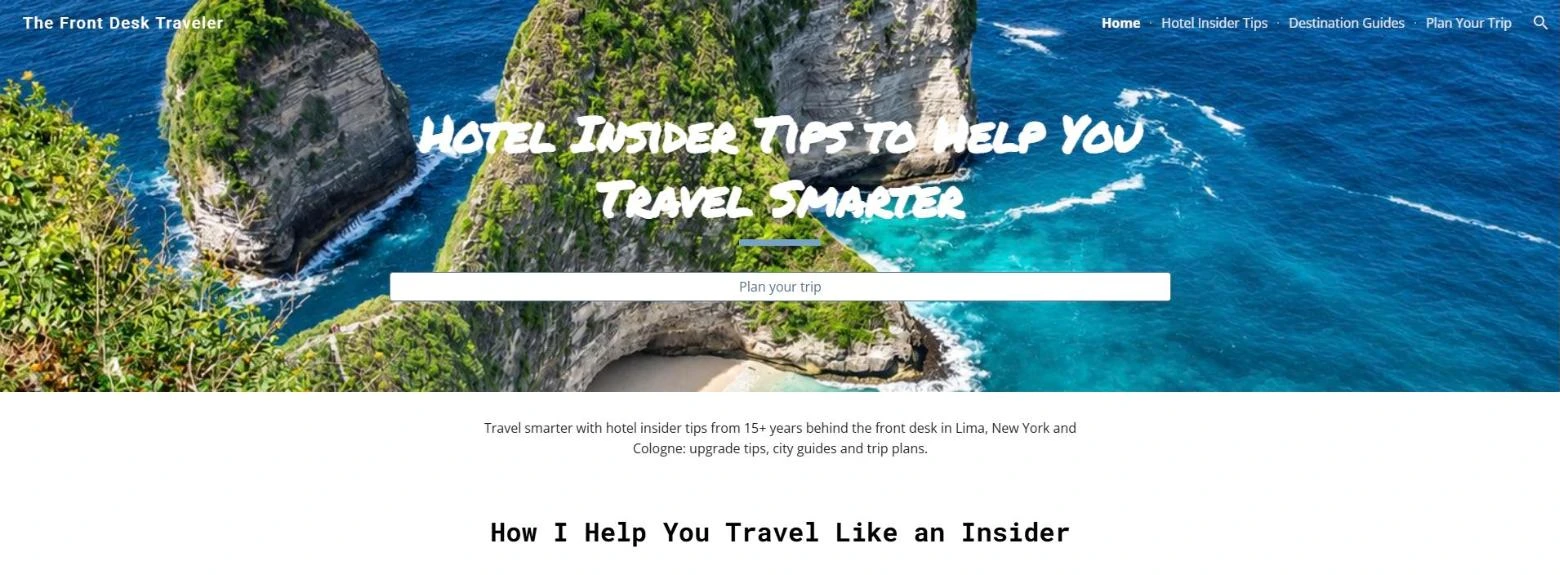
Site audit in Screaming Frog SEO Spider Home page, before and after Hotel Insider Tips: from empty banner to full guide The HubSpot trip-request form GA4 stream and enhanced measurement
08Tools used
09Key learnings
- SEO is a learning process: My website is not at the top of Google search results yet, and I know it will take time. But this exercise helped me understand what SEO really means. I learned that it is not just about keywords, but also about technical SEO, website structure, content optimization, and using tools like Screaming Frog SEO Spider to identify problems. I also learned how important it is to follow the right steps, from analyzing a website to fixing issues and improving its performance. There is still a lot to learn, but I have taken my first steps.
- Visibility comes first: One of my biggest lessons was understanding how something as small as a noindex setting can prevent an entire page from appearing in Google search results. You can have great content, the right keywords, and a beautiful website, but if Google is instructed not to index your page, all that SEO work won’t help that page appear in search results.
- Track before you promote, so every change can be measured.
Want to talk about this project?
I’m happy to walk you through the thinking behind it.